Beyond Second-Hand: How Refurbished Tech Is Building a Circular Economy

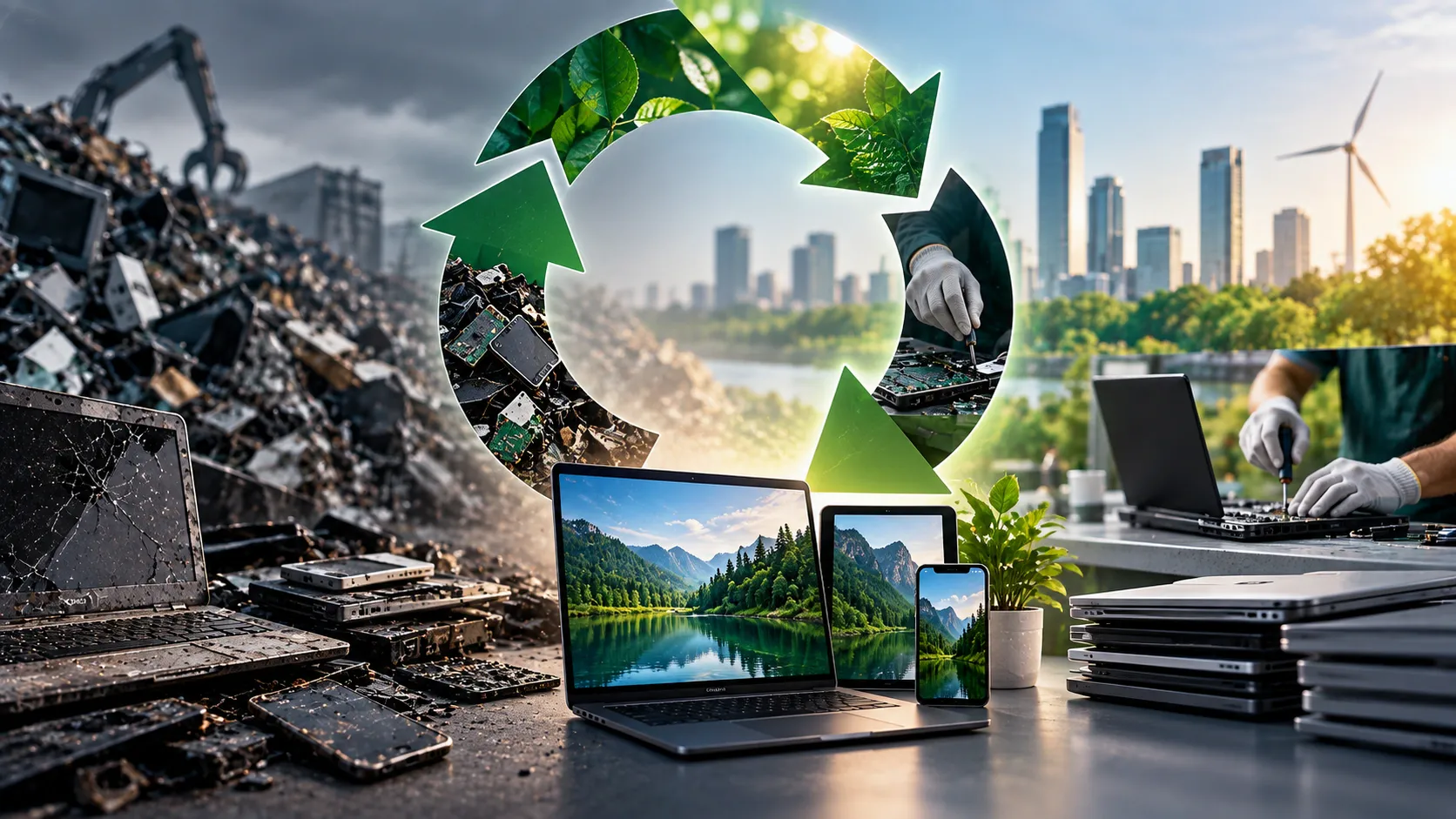
Every year, the world throws away more electronics than the year before. In 2022 alone, people generated 62 million tonnes of e-waste worldwide, and less than a quarter of it was properly recycled, according to the UN’s Global E-Waste Monitor 2024. In the UAE, research from local universities puts annual e-waste generation at around 17 kg per person, one of the highest rates in the Middle East. Refurbished and renewed technology is one of the few practical ways to slow that number down.
What Is a Circular Economy for Electronics?
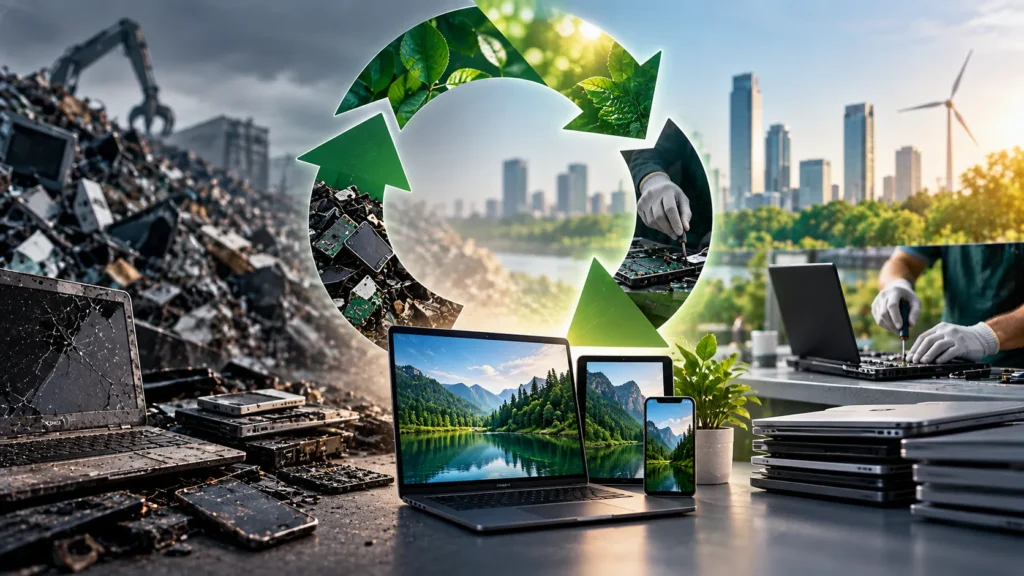
A circular economy keeps devices, parts, and materials in use for as long as possible instead of throwing them away after one life cycle. Rather than extract raw materials, build a product, and discard it once it breaks or gets old, a circular model repairs, resells, and reuses that same product again and again. For electronics, this means a laptop or phone gets a second, third, or fourth owner before any of its materials are recycled or lost.
The alternative is the linear model most of the tech industry still runs on: take, make, and dispose. Raw materials are mined, turned into a device with a limited lifespan, and thrown out once it’s replaced. That model is expensive for the planet and, increasingly, for buyers too.
How Big Is the E-Waste Problem?
It’s bigger than most people realise, and it’s growing fast. Global e-waste is on track to hit 82 million tonnes by 2030, according to the same UN report, and the raw materials inside that discarded e-waste were worth an estimated $91 billion in 2022 alone, most of it never recovered. Locally, UAE-based recyclers such as Enviroserve process tens of thousands of tonnes of e-waste every year, but a large share of unwanted electronics in the region still ends up in landfill or gets exported informally rather than repaired or recycled properly.
What’s the Difference Between Renewed and Refurbished Tech?
Renewed devices are typically barely used; they may have been returned unopened or with minimal wear, then inspected before resale. Refurbished devices have seen more use, but they’re cleaned, repaired, tested, and restored to full working condition before they’re sold again. Both are different from a plain second-hand sale, where a device changes hands with no formal testing, grading, or warranty at all.
How Does Buying Refurbished Support a Circular Economy?
Every refurbished device sold is one device that doesn’t need to be manufactured from scratch, and one less device heading to a landfill. That has a real, measurable effect:
- Fewer raw materials mined. Laptops and phones contain rare earth elements and precious metals that require significant mining to extract. Reusing an existing device avoids that demand entirely.
- Lower carbon footprint. Manufacturing a new device uses far more energy than testing and repairing an existing one, so extending a device’s life cuts the emissions tied to production.
- Less e-waste in landfill. A device that gets resold and reused simply doesn’t enter the waste stream, at least not yet.
What Are the Economic Benefits of Refurbished Tech?
Refurbished and renewed tech makes good hardware available at a lower price, which matters in a market like the UAE where premium electronics carry a high retail cost. It also supports a local supply chain: technicians who test and repair devices, logistics teams, and retailers who grade and warranty what they sell. As more UAE shoppers choose refurbished over new, that sector grows along with it.
Is Refurbished Tech as Reliable as New?
Yes, provided it comes from a seller that actually tests and grades what it sells. A reputable refurbished device goes through diagnostic checks on the battery, screen, ports, and internal components before it’s listed, with a clear condition grade and a real warranty attached. The risk isn’t in the word “refurbished” itself; it’s in buying from a seller that skips the testing step.
What Can UAE Consumers Do to Support a Circular Economy?
A few habits make a real difference:
- Buy refurbished or renewed when you’re upgrading, rather than defaulting to new.
- Trade in or sell your old device instead of leaving it in a drawer, so it can be tested and resold.
- Recycle through a registered e-waste programme when a device genuinely can’t be reused, rather than putting it in household trash.
- Choose sellers who grade and warranty their stock, so you know exactly what condition you’re buying.
None of these require a big lifestyle change. They just redirect a purchase you were already going to make toward a more circular option.
The Bigger Picture
A circular economy for electronics won’t happen through consumer choices alone; it needs standardised grading, better recycling infrastructure, and products designed to be easier to repair. But every refurbished laptop or renewed phone bought instead of a new one is a concrete step in that direction, and a practical way to cut e-waste without compromising on quality.
Frequently Asked Questions
What is a circular economy in simple terms?
It’s an economic model where products and materials are reused, repaired, and kept in circulation for as long as possible, instead of being thrown away after a single use.
How does e-waste affect the environment?
Discarded electronics can leak heavy metals and toxic chemicals into soil and water if they’re not disposed of properly, and manufacturing replacements for them uses significant raw materials and energy.
What is the difference between refurbished and renewed devices?
Renewed devices are usually lightly used or unopened returns, while refurbished devices have seen more use but are repaired, cleaned, and tested before resale.
Is buying a refurbished laptop a good idea?
Yes, as long as it’s bought from a seller that tests, grades, and offers a warranty on the device. It’s a practical way to get reliable performance at a lower cost while reducing e-waste.
How can I recycle old electronics in the UAE?
Many retailers and registered recyclers in the UAE offer e-waste drop-off or trade-in programmes, so devices are properly dismantled or resold rather than thrown in household trash.
Conclusion
The numbers make the case on their own: 62 million tonnes of e-waste a year globally, most of it never recycled, and one of the highest per-capita rates in the Middle East right here in the UAE. Buying refurbished or renewed won’t fix that on its own, but it’s a real, immediate way to keep a working device in use instead of adding to the pile. The next time you’re upgrading a laptop or phone, a tested, graded, and warrantied refurbished option is worth putting on the shortlist, for your budget and for the bigger picture.